
2026/11/14 09:00-10:30 Room 301
- Emerging Risk Factors in Stroke
- Time
- Topic
- Speaker
- Moderator
- 09:00-09:30
- Move It or Lose It? Exercise in Secondary Stroke Prevention
- SPEAKER:
SZ-HUAN WANG
王思桓
Taiwan (台灣)
- MODERATOR:
Cheng-Yang Hsieh
謝鎮陽
Taiwan (台灣)
Giia-Sheun Peng
彭家勛
Taiwan (台灣)
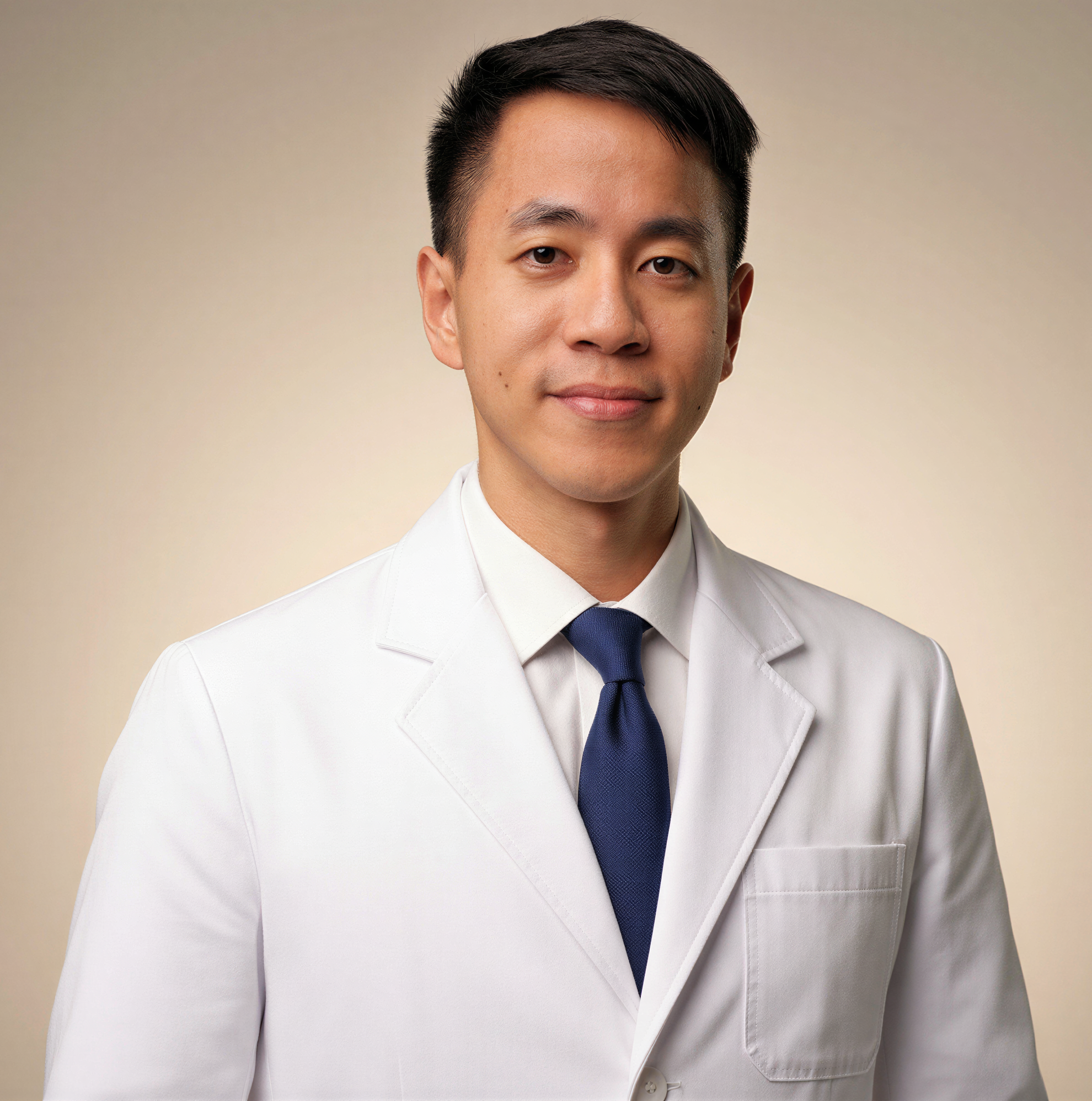
- SZ-HUAN WANG
- MD
-
Superintendent, Star Rehabilitation Clinic
E-mail:B9502001@gmail.com
Executive Summary:
Dr. Scott Szu-Heng Wang is a board-certified specialist in Physical Medicine and Rehabilitation, co-founder of the Hengxin Rehabilitation Network, and Medical Director of Neihu Hengxin Rehabilitation Clinic. He previously served at Chang Gung Memorial Hospital. He is also the founder of One-Minute Fitness, an evidence-based health education platform with more than 268,000 followers and subscribers. Dr. Wang has published four peer-reviewed articles and authored or co-authored three health books, including *Exercise Against Dementia*. His work focuses on translating medical evidence into practical guidance for clinicians and the public.
Dr. Scott Szu-Heng Wang is a board-certified specialist in Physical Medicine and Rehabilitation, co-founder of the Hengxin Rehabilitation Network, and Medical Director of Neihu Hengxin Rehabilitation Clinic. He previously served at Chang Gung Memorial Hospital. He is also the founder of One-Minute Fitness, an evidence-based health education platform with more than 268,000 followers and subscribers. Dr. Wang has published four peer-reviewed articles and authored or co-authored three health books, including *Exercise Against Dementia*. His work focuses on translating medical evidence into practical guidance for clinicians and the public.
Lecture Abstract:
Physical inactivity remains one of the most underappreciated modifiable risk factors in stroke care. While recent guideline updates have focused on pharmacological advances, exercise receives comparatively little attention in routine secondary prevention, despite evidence of large effect sizes: in a 2025 NHANES cohort of stroke survivors, meeting leisure-time physical activity recommendations was associated with a 74% reduction in all-cause mortality (HR 0.26), whereas the combination of inactivity and prolonged sitting nearly quadrupled mortality risk.
This lecture translates current evidence into practice. First, we quantify the cost of inactivity in stroke survivors, including meta-analytic evidence that exercise improves post-stroke cognitive function, a domain where pharmacological options remain limited. Second, we convert "exercise more" into a concrete, guideline-concordant prescription: aerobic dosing per AHA/ASA recommendations, realistic step-count targets (each additional 1,000 steps/day associated with 15% lower mortality), isometric training as the most effective modality for blood pressure reduction (8.2/4.0 mmHg), vigorous intermittent lifestyle activity for patients who "have no time," and resistance training to counter lean-mass loss in the GLP-1 era. Third, drawing on randomized evidence for motivational interviewing and implementation intentions, we demonstrate brief consultation techniques that measurably increase patient activity, alongside screening for post-stroke fatigue, depression, and fear of falling. Participants will leave with an exercise prescription template and a 60-second counseling script ready for next-day clinical use.
Physical inactivity remains one of the most underappreciated modifiable risk factors in stroke care. While recent guideline updates have focused on pharmacological advances, exercise receives comparatively little attention in routine secondary prevention, despite evidence of large effect sizes: in a 2025 NHANES cohort of stroke survivors, meeting leisure-time physical activity recommendations was associated with a 74% reduction in all-cause mortality (HR 0.26), whereas the combination of inactivity and prolonged sitting nearly quadrupled mortality risk.
This lecture translates current evidence into practice. First, we quantify the cost of inactivity in stroke survivors, including meta-analytic evidence that exercise improves post-stroke cognitive function, a domain where pharmacological options remain limited. Second, we convert "exercise more" into a concrete, guideline-concordant prescription: aerobic dosing per AHA/ASA recommendations, realistic step-count targets (each additional 1,000 steps/day associated with 15% lower mortality), isometric training as the most effective modality for blood pressure reduction (8.2/4.0 mmHg), vigorous intermittent lifestyle activity for patients who "have no time," and resistance training to counter lean-mass loss in the GLP-1 era. Third, drawing on randomized evidence for motivational interviewing and implementation intentions, we demonstrate brief consultation techniques that measurably increase patient activity, alongside screening for post-stroke fatigue, depression, and fear of falling. Participants will leave with an exercise prescription template and a 60-second counseling script ready for next-day clinical use.